
Investment Research Support Services
Financial modeling, equity research, fundraising presentations, and transaction and capital advisory - produced to the standard your institutional clients apply, delivered within your workflow.
,+
+
+
+
>95%

Perusal Global is a knowledge partner to founders, private equity and venture capital teams, institutional asset managers, brokerage research desks, and CEOs making capital-critical decisions.
We build financial models, write equity research and initiating coverage reports, and conduct commercial due diligence-integrating seamlessly into the client’s workflow and delivering work under their name.
Our proprietary AI-powered research tools enable us to analyse more information, cover greater ground, and work faster without compromising the rigor, judgment, or quality expected of institutional-grade output.
Where Most Investment Research Falls Short
Revenue forecasts carried over from management projections without adequate stress-testing. A WACC drawn from a sector average instead of being calibrated to the company’s actual capital structure. A valuation shaped to reach a preferred outcome, with the assumptions justified afterwards.
These are common shortcuts in models produced under deadline pressure. They also weaken the reliability of the conclusions that investors and decision-makers are expected to act on.
The Contrast Made Explicit: The Brief We Work To
We validate assumptions before building the model. This includes reviewing annual and quarterly filings, benchmarking the company against relevant sector peers, and conducting primary channel research where required.
Every engagement is senior-led from scoping through delivery. The analyst who defines the approach also builds the model and writes the report, ensuring continuity of judgment throughout the process.
The financial model and the research report are not developed as separate outputs. They are one integrated piece of work, with the analysis, assumptions, valuation, and conclusions fully aligned.
Across 2,500+ financial models spanning pre-seed fundraising, mid-market M&A, and listed-equity research, the most consequential errors we have identified and corrected were often buried in assumptions that everyone had already agreed not to question.
Who This is for

Brokerage firms and sell-side research desks
Brokerage firms and sell-side research desks that require initiating coverage reports, earnings updates, and sector research produced to institutional standards and published under their own brand for distribution to institutional investors.

Asset managers, PE and VC deal teams, and investment committees
Asset managers, PE and VC deal teams, and investment committees that need financial models, due diligence, and company analysis to validate and defend investment decisions.

Founders and CFOs preparing for a capital raise
Founders and CFOs preparing for a capital raise, where investors will test the model, challenge the scenarios, and question the assumptions. The deck opens the door; the model keeps the conversation moving.

M&A deal teams
M&A deal teams that need independent valuations and financial models capable of withstanding counterparty scrutiny
How We Work
We operate as an embedded decision-support function for the research teams and investment professionals we work with. The client defines the requirement-an initiating coverage report, a transaction model, a commercial due diligence report, or a fundraising package-and we build it to fit their workflow. The final positioning, conclusions, and client representation remain entirely theirs.
Across every service, the analytical work is integrated. An initiating coverage report and the financial model supporting its valuation are treated as one engagement. In commercial due diligence, the report and the transaction model are developed in parallel, allowing qualitative findings and quantitative assumptions to inform each other as the work progresses. A fundraising package is built from the financial architecture upward, ensuring that every number in the presentation can be traced to a specific model assumption.
The output is coherent because the process behind it is coherent.
Primary-source validation begins before the model architecture is set. We work from annual and quarterly company filings, sector benchmarks, and primary channel research. AI-assisted retrieval and screening are applied across this source base first, allowing analyst time to focus on interpretation, validation, and judgment.
WACC is calibrated to the actual capital structure of the business being valued. The analyst who scopes the engagement is also the one who executes and delivers it, ensuring that no context is lost between the initial brief and the final output.

Our Investment Research Support Capabilities
Our work is organized across four dedicated practices, each with its own page.
Follow the links for full detail, methodology, and use cases.
Financial Modeling & Valuation
Investor-ready financial models in which every assumption is traceable to a validated source and scenario analysis is built into the model architecture from the outset, rather than added as an afterthought.
- DCF and LBO
- Three-statement integration
- Scenario and sensitivity
- Cross-border valuation
- IPO readiness
Equity Research & Investment Insights
Institutional-grade equity research for brokerage firms, asset managers, and investment professionals - combining a clearly articulated investment thesis with a fully integrated financial model, developed as a single engagement.
- Initiating coverage
- Earnings intelligence
- Buy-side & sell-side research
- Portfolio monitoring
- Special situations
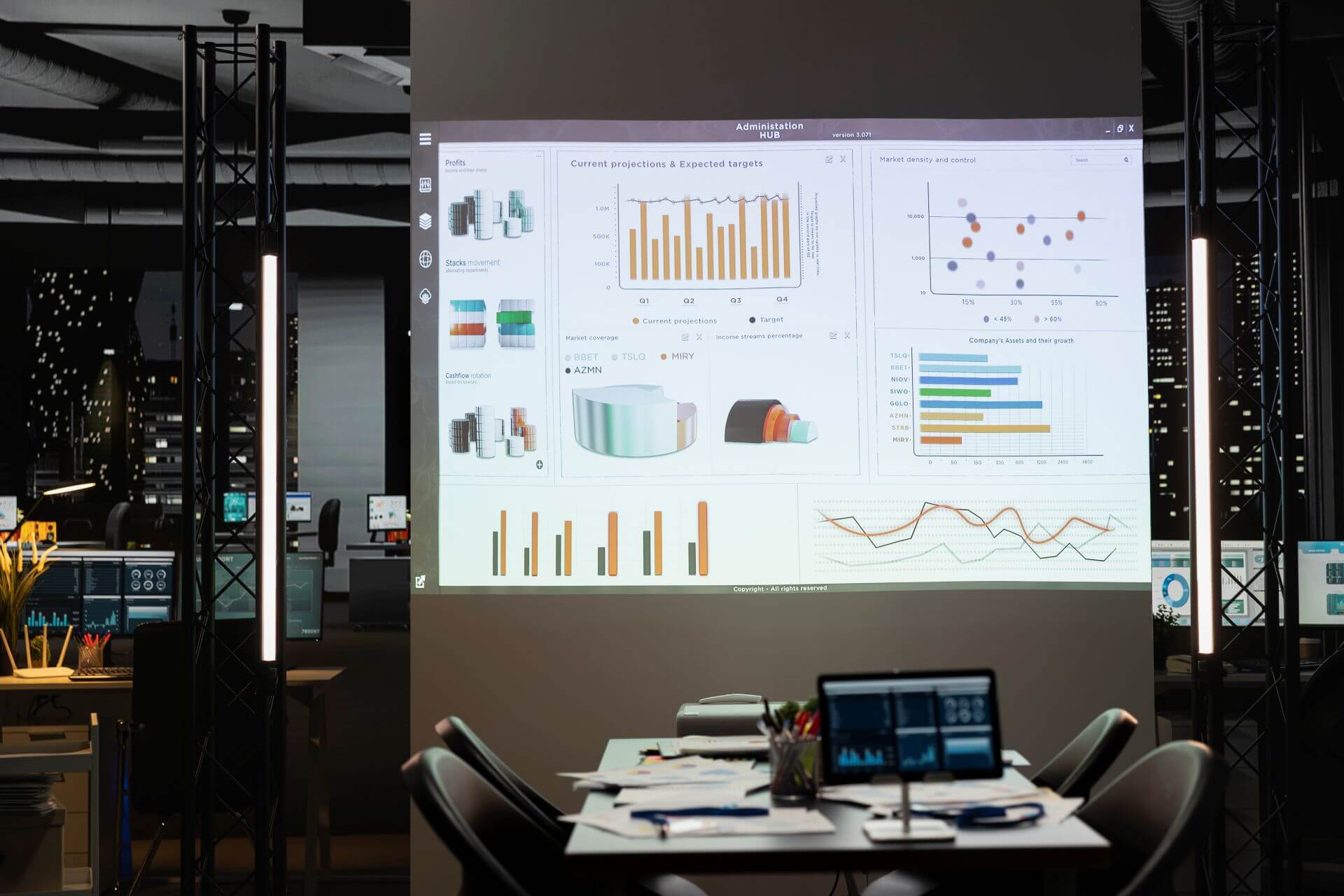
Fundraising Presentations
A defensible valuation and a rigorously stress-tested financial model form the foundation of every engagement, with investor materials built from the underlying analysis rather than retrofitted to support the narrative.
- Valuation structuring
- Pitch decks
- Information memoranda
- Pre-fundraising analysis

Transaction & Capital Advisory
An independent view at the point of commitment, grounded in a robust financial model and objective market assessment rather than management’s presentation alone.
- Commercial diligence
- Red-flag diligence
- Market intelligence
- Capital allocation
- Portfolio monitoring
How We Engage
Ad-Hoc Mandates
A defined deliverable, a clear scope, a fixed timeline. Most ad-hoc mandates are scoped and delivered within 4 to 12 weeks.
Transaction-ready financial models and valuation outputs
Pitch decks, investor presentations, and Information Memoranda
Initiating coverage reports and one-off equity research mandates
Investor return analysis: IRR, exit multiples, and scenario outcomes
Commercial due diligence, market and competitor intelligence, and capital allocation analysis for a specific transaction, investment decision, or portfolio review
Ongoing Research Partnerships
A defined monthly scope with dedicated senior access. We support continuous coverage, earnings-cycle model maintenance, and recurring research across fundraising cycles, portfolio companies, or coverage universes. The scope evolves as client mandates change.
Continuous financial model updates aligned with business performance and earnings cycles
Valuation analysis across funding rounds, including pre-money and post-money valuation and cap table implications
Ongoing company analysis, sector research, and competitive intelligence
Portfolio monitoring and maintenance of MIS and financial tracking systems
Sectors We Cover
Our work is grounded in the sectors we know deeply. Domain knowledge changes the questions worth asking and the answers worth trusting, so every engagement is led by people who understand the industry, not just the discipline. Whichever sector you operate in, the work is shaped by how that market actually behaves, where the value sits, where the risks hide, and what a credible case looks like to the people you are trying to convince.
We also cover:
Frequently Asked Questions
For cross-border mandates involving the US and India, the US-listed peer set provides the valuation anchor, including comparable trading multiples and the beta reference point used to benchmark the Indian company.
The key adjustments are made on the Indian side. These include adding a country risk premium to the discount rate, normalizing growth assumptions for inflation differentials across currency environments, and applying an unlevered beta framework adjusted for the local cost of debt and liquidity premium.
For GCC mandates, the same methodology applies, with country, market, and liquidity adjustments calibrated to the relevant regional capital market.
We build valuation frameworks that scale from Seed through Pre-IPO, with pre-money and post-money analysis structured around cap table implications, anti-dilution mechanics, and investor return outcomes. A Series A investor and a Series C investor are underwriting different stages of the business. The valuation framework reflects those differences at every round.
Sophisticated investors rarely reject a raise because of the deck; they reject it because the model does not hold up. The real test is whether the fundraising advisor understands the assumptions well enough to defend them and whether the valuation has been built for the specific investor class reviewing it. Polish without that foundation lasts only until the first serious question-usually in the second meeting.
Macroeconomic inputs are embedded directly into the model architecture. Yield-curve signals inform terminal growth assumptions and recession scenarios, while monetary policy transmission is reflected explicitly in sector valuations. In capital-intensive sectors, where the cost of debt is a key value driver, credit-spread analysis is integrated into the model rather than added later as commentary.
We conduct shadow due diligence on the financial model before the Virtual Data Room (VDR) opens. This includes bridging management accounts to audited financials, documenting revenue recognition and unit economics assumptions, and structuring the model around the questions a buy-side analyst is likely to ask. The objective is to reduce friction during diligence, not create another layer of documentation.
Perusal Global operates as a white-label research partner. Everything we produce-including financial models, initiating coverage reports, buy-side and sell-side research, due diligence reports, and investor materials-is delivered under the client’s name.
For sell-side clients, the research is published under the brokerage firm’s brand and distributed to its institutional investor audience, with no reference to Perusal Global. For buy-side clients, the work is used internally to support investment analysis and decision-making.
We produce the work. The client owns it, publishes or uses it, and retains responsibility for the final output.
The client defines the requirement-an initiating coverage report, a transaction model, a due diligence report, or a fundraising package. We build the work within the client’s house style, publication templates, and research framework, where applicable. Drafts are reviewed by the client’s team, and the final output is delivered in a form that can be published or used directly.
Perusal Global does not make investment recommendations, advise investors directly, or publish research independently. We produce the underlying research and analysis; the client retains ownership of the final output, the investment view, the recommendation, and the end-client relationship.
Our client work spans the US, UK and Europe, the GCC, and India. Cross-border valuation across the US, India, and GCC is a particular area of depth, with country risk premium adjustments, inflation differential normalization, and GAAP-to-IFRS reconciliations handled as an integral part of the engagement.
For a mid-cap or growth-stage company with adequate data availability, a full initiating coverage report typically takes three to six weeks. The engagement may include a business model deep-dive, peer benchmarking, management assessment, earnings quality analysis, an integrated financial model, and the investment thesis. The timeline depends primarily on sector complexity and access to primary data. For brokerage clients working to a fixed publication schedule, the engagement is scoped to the calendar from the outset.
Clients typically engage us at one of three points. Capacity: the coverage universe or transaction pipeline has outgrown the internal team, while hiring cannot keep pace with demand. Depth: the mandate requires sector expertise or a modeling capability that is not available in-house. Independence: a valuation, investment thesis, or diligence view needs to be developed outside the team that already holds a position on it. Where none of these conditions applies, an internal build is often the better answer-and we will say so.
Most of our clients already have an internal research team. We work as an extension of it, taking on the build-intensive work-the financial model, initiating coverage report, or sector deep-dive-so senior analysts can focus on judgment, investment conclusions, and client engagement. The direction remains with the client; the execution is handled by us.
Published research answers the question its author chose to address. A terminal provides data and inputs, but not the judgment required for a specific decision. Our work is built around the decision in front of the client, with assumptions that are transparent, traceable, and open to challenge-the standard an investment committee or institutional client will apply. Where existing research is sufficient, we will say so.
Most mandates begin in one area and extend into another. A fundraise typically requires the financial model and investor materials to be developed together. A transaction approaching commitment may require both commercial due diligence and valuation support. Rather than fitting the brief into a predefined service line, start with the decision at hand. We will map the requirement to the relevant capabilities and scope only the work that adds value.
Fees vary by service and reflect the scope of the engagement, depth of analysis, seniority of the team involved, number of markets or entities covered, and whether the mandate is a one-time build or an ongoing research partnership. A standalone valuation and continuous research coverage are fundamentally different engagements and are priced accordingly. Once the deliverables and timeline are defined, we provide a complete scope and fixed quotation before work begins, with no open-ended billing.

Ready to Work?
The first conversation begins with the decision in front of you-the raise, the transaction, the coverage mandate, or the capital allocation question.
It does not begin with selling a service.